
API (API stands for Application Programming Interface)
API stands for Application Programming Interface
| PublishedAug 11, 2026 | Read time3 min | Views77 | Category Firewall | Tags — |
API stands for Application Programming Interface. In simple terms, it is a set of rules and protocols that allows two different software applications to talk to each other. Instead of developers having to write new code from scratch every time they want their software to perform a specific function (like processing a payment or fetching weather data), they can use an API to borrow that functionality from another service.
The Restaurant Analogy
The easiest way to understand an API is to think of a restaurant:
-
You (The Client): You are sitting at the table with a menu, knowing what you want to order.
-
The Kitchen (The Server): The kitchen has the ingredients and the ability to fulfill your order, but you can’t just walk back there and cook it yourself.
-
The Waiter (The API): You need a messenger to take your order to the kitchen and bring the food back to your table. The waiter is the API.
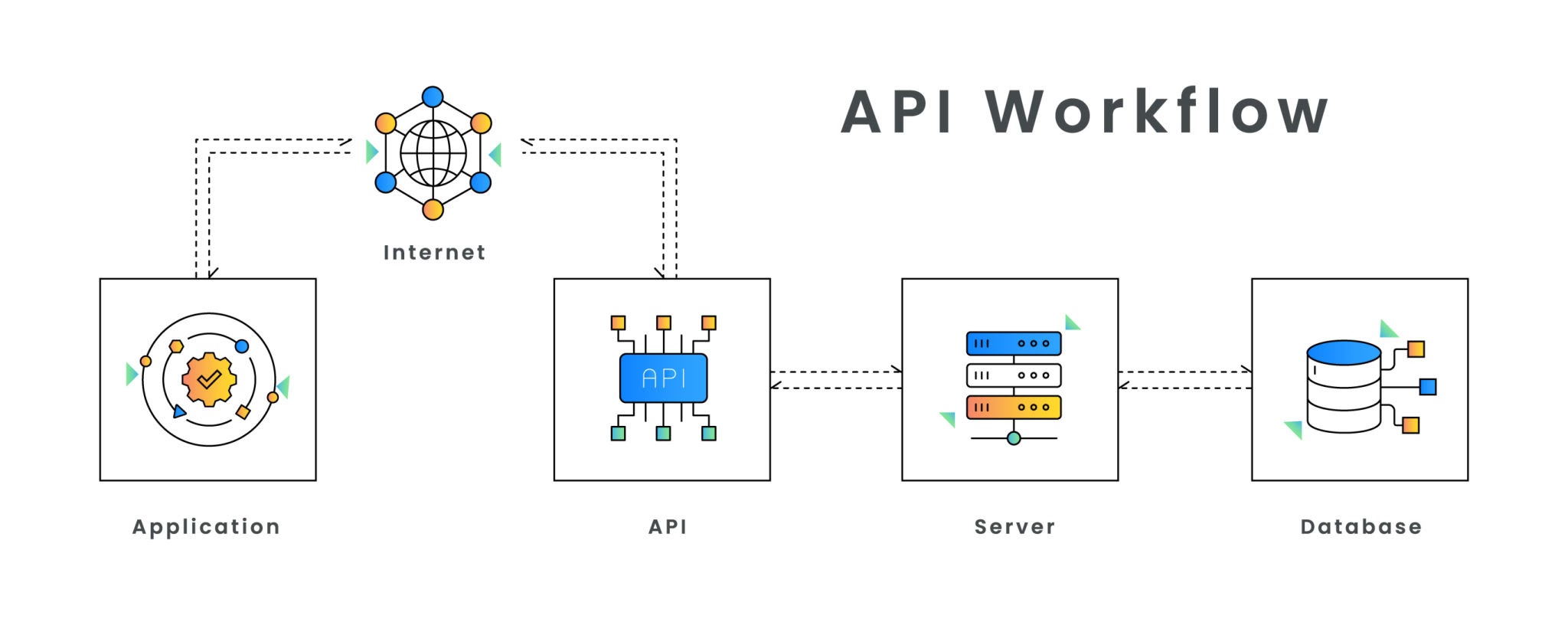
How It Works in Practice When software communicates, the process generally follows a simple loop:
-
The Request: A client application (like a mobile app or web browser) initiates a request for data or a specific action.
-
The API: The API receives the request, checks if it is valid (making sure the client has the right permissions), and translates it into a format the server can understand.
-
The Server: The receiving server processes the request and gathers the necessary data or performs the requested action.
-
The Response: The server sends the result back to the API, which then delivers it to the original client application. APIs in Everyday Life
You use APIs constantly without realizing it. Here are a few common examples:
• Weather Apps: The weather app on your phone doesn’t have its own meteorological sensors. It uses an API to pull real-time data from a service like the National Weather Service.
• “Log in with Google/Apple”: When a new app lets you sign up using your existing Google or Apple account, an API is securely verifying your identity between the two platforms without sharing your password.
• Travel Booking: When you use a site like Expedia to search for flights, the site uses APIs to simultaneously ask Delta, United, and American Airlines for their current prices and availability.
difference between a REST API and a GraphQL API comes down to how data is requested and delivered.
REST is the traditional, structured approach where the server dictates exactly what data is returned. GraphQL is a newer, more flexible approach where the client specifically asks for exactly the data it needs, and nothing more.
To build on the previous restaurant analogy:
• REST API is like ordering a set meal: You order “Combo #1.” It comes with a burger, fries, and a drink. Even if you only wanted the burger, you still get (and have to download) the fries and drink. If you also want a side salad, you have to place a completely separate order with the waiter.
• GraphQL API is like going to a buffet: You hand the waiter a highly specific list: “I want one burger patty, two tomatoes, and exactly three French fries.” The waiter goes to the kitchen and brings back exactly what you asked for on a single plate.
| Feature | REST API | GraphQL API |
|---|---|---|
| Endpoints | Multiple URLs for different data (e.g., /users, /posts, /comments). | A single URL endpoint (e.g., /graphql) handles all requests. |
| Data Fetching | Often requires multiple requests to different endpoints to gather related data. | Can fetch complex, nested, and related data in a single request. |
| Data Size (Efficiency) | Prone to over-fetching (getting more data than you need) or under-fetching (not getting enough and needing a second request). | Highly efficient. The client gets exactly what it asks for, minimizing wasted bandwidth. |
| Learning Curve | Easier to learn and widely standardized. Best for simple applications. | Steeper learning curve, but highly beneficial for complex, data-heavy applications (like social media feeds). |
// Comments (0)